
As I had advised previously, I was ‘off-grid’ for most of last week, which is why there wasn’t a Talking Points last Monday. If you’re struggling with intense heat this summer, I recommend camping next to the ocean. We were even a little chilled in the evenings.
I returned to a very familiar environment. The US-Iran War is heating up, although both sides have paused attacks this weekend to give peace a chance. Again. Oil prices rose sharply last week as the attacks worsened. Meanwhile, President Trump rolled out new tariffs last week. What’s new, perhaps, is that investors are now very clearly questioning the investment thesis behind the AI revolution and this is adding to the negative sentiment in stock markets.
As I have been warning for many weeks — at some length in the Talking Points two weeks ago — the growth impulse from US AI investment seems to have peaked. The South Korean stock market — until recently the strongest-performing market in the world over the previous year or more — is now in correction territory, down 28% from last month’s peak. The SpaceX stock price has fallen nearly 60% from its post-IPO peak and is now 15% below its IPO price. Negative free cash flow is all of a sudden a problem for investors in the Magnificent 7.
In this week’s Talking Points I’ll discuss Trump’s latest tariff threats, Bank Indonesia’s monetary policy strategy, and Japanese inflation and the yen.
Renewed Iran conflict pushes oil prices higher
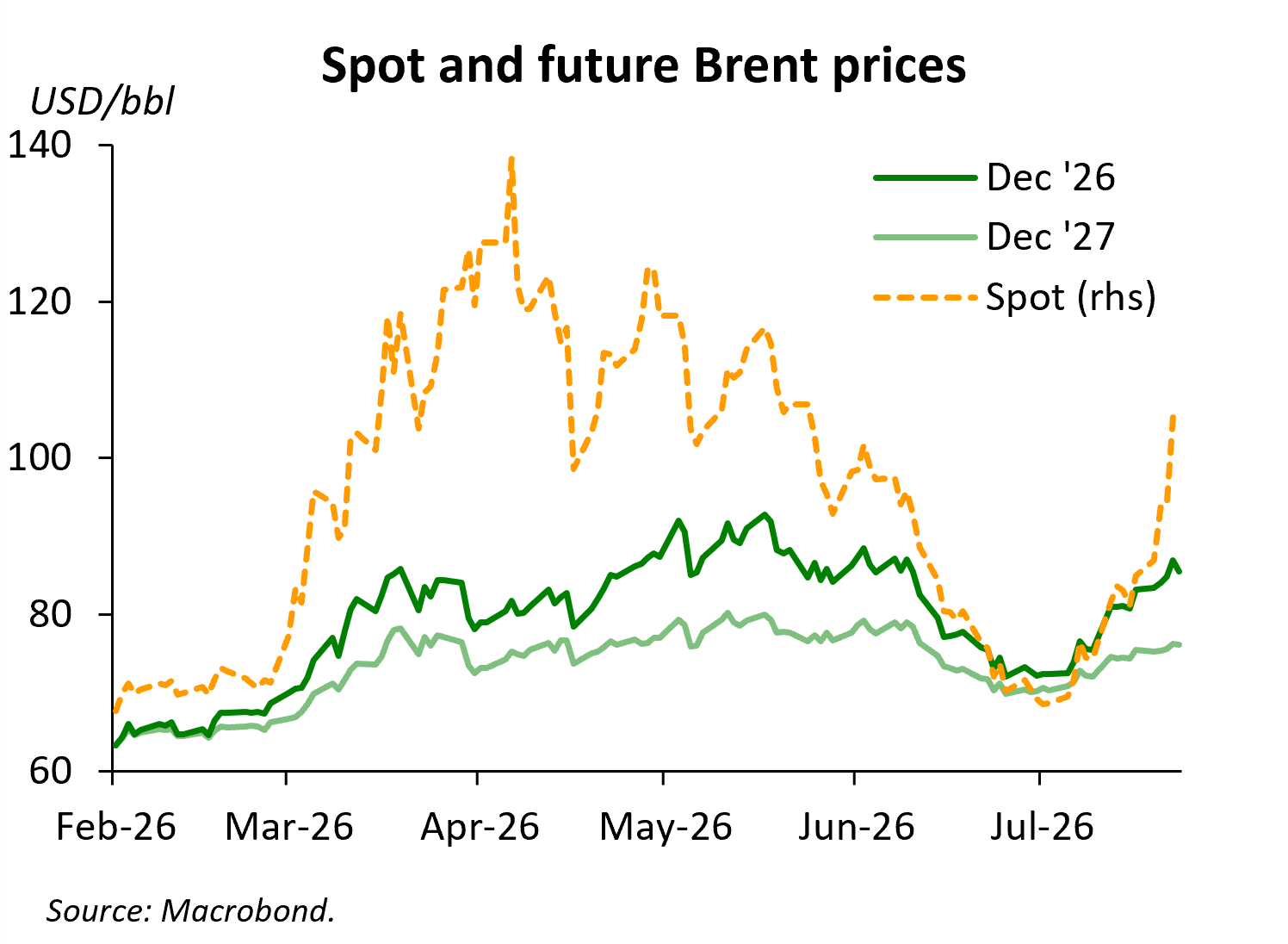
While Trump has held off from acting on his threats to mount a major new offensive against Iran — the US has been slower to replenish its Patriot missile stockpiles than Iran has been to replenish its supplies of drones — the opening up of a new front in the Red Sea by the Houthis helped push spot Brent oil up 24% last week. So far in July, spot Brent has risen USD35/bbl or 49%, marginally faster than during the first 23 days of March (USD32/bbl or 45%).
Crude oil futures (for December 2026) have risen 18% so far this month, a little slower than in the same period of March (21%). Investors are perhaps a little chastened after prices rose much less — and fell much more — during the war and the ceasefire than many industry experts had predicted. But we know that governments have run down crude oil reserves since February — by at least 105mn barrels as of May according to the JODI data. But those data don’t include China. While higher sales of EVs in recent months will have helped to reduce oil imports in China, releases of government oil reserves likely also played a part. And we don’t know by how much those reserves declined, so we don’t know how much the government would be able to support oil markets in the coming weeks.
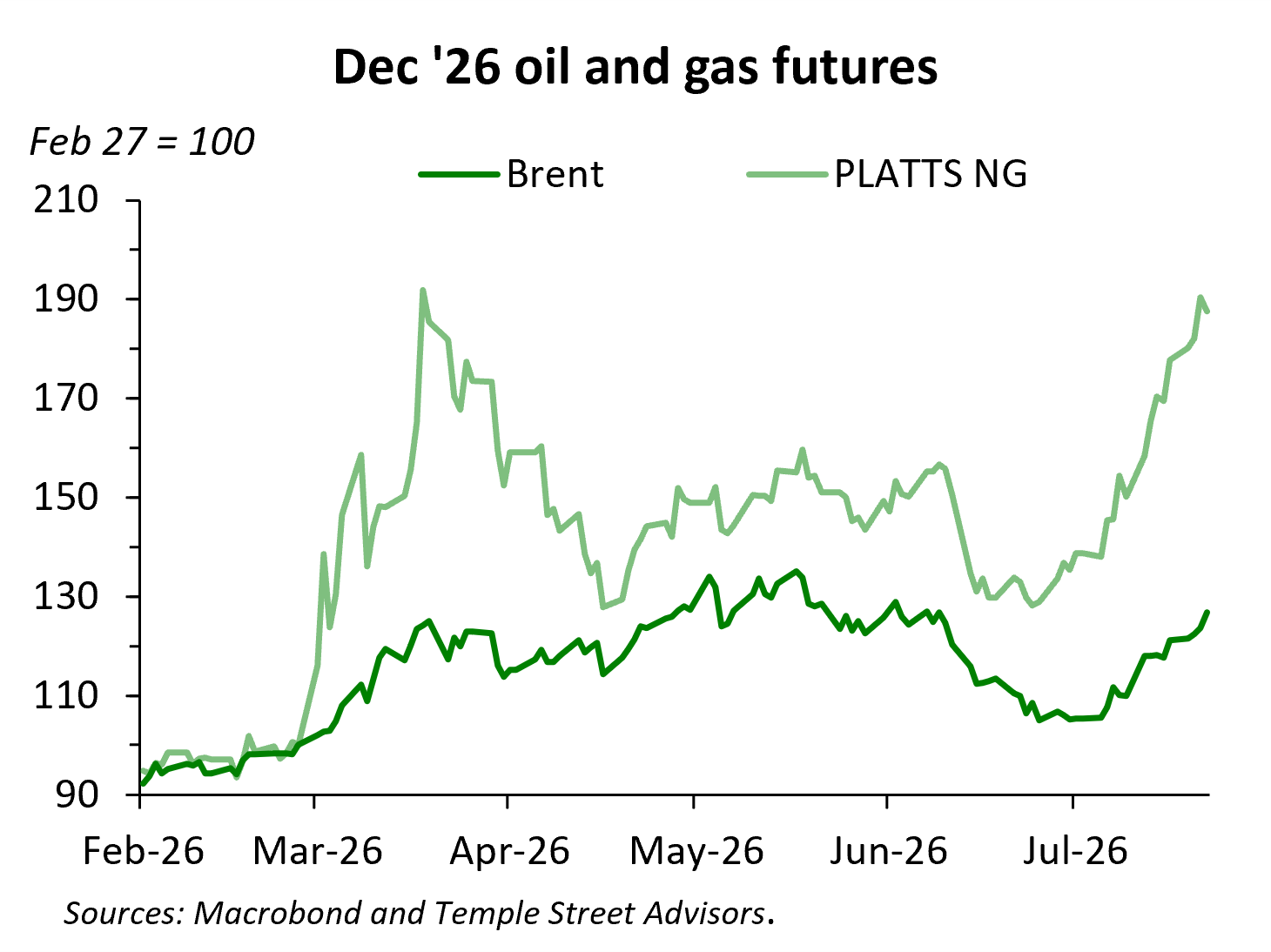
As in March, natural gas prices have risen much more quickly than crude oil prices — NYMEX futures for PLATTS Singapore have risen twice as fast as Brent futures this month.
And already, retail prices for gasoline are rising in Asia Pacific. So the dilemma for central banks returns: how to respond to rising inflation risks from higher energy prices and downside risks to growth. For the most part, economies — especially those most connected to the AI investment boom — weathered the March/April oil shock surprisingly well. But if that growth support is now weakening, the task for central banks will be more challenging in the coming weeks.
“Tariff man” is back in action
Trump’s tariff threats last week can be dispensed with fairly swiftly. First, the July 20 threat of a 50% tariff on a wide range of imports from Canada to be implemented in August will likely have only a modest impact on the Canadian economy. These tariffs are a response to Canadian retalliation against the tariffs Trump imposed last year — retalliation in the form of the withdrawal of US alcohol from provincial government liquor stores, tariff-rate quotas applied to imports of US automobiles from companies that had re-shored production to the US after Trump’s tariffs on Canadian autos were applied; and the long-standing dispute over Canada’s dairy marketing practices. The list of products subject to these new US tariffs accounts for about 7% of US imports from Canada so far this year and most products are protected by the CUSMA treaty.
What’s more interesting, to me, is how this list was compiled. Why would imports of one 10-digit HS category of goods be included but not the adjacent — very similar — product? The scope for rent-seeking behavior when the government levies tariffs item by item is high, which is one of the criticisms of tariffs that has been raised all along.
Second, the 10% or 12.5% Section 301 tariffs levied on July 23 on imports from 60 countries alleged not to have sufficient protections against importing the products of forced labour — accounting for very nearly all US imports of non-exempt products — just replaces the Section 122 tariffs that were imposed after Trump’s IEEPA (“reciprocal”) tariffs were ruled unconstitutional by the Supreme Court in February. These new tariffs have already been challenged by two New York companies on the same grounds that the IEEPA tariffs were successfully challenged: that the President does not have the power to levy tariffs in such a broad manner. So in the near-term, tariff rates won’t change much — except for Canada and Mexico because these tariffs do not benefit from the CUSMA exemptions, unlike the Section 122 tariffs — and perhaps the courts will decide quickly that these tariffs aren’t allowed either.
I should probably add the opening of a Section 301 investigation into the EU’s “discrimmination” against US firms — triggered by the levying of a fine against Google for breaches of its Digital Markets Act for prioritizing its own services in search results. According to Trump, it is unacceptable for other countries to have laws that differ from US laws — and to expect US firms to comply with them.
What received less attention last week was Trump’s Executive Order offering relief to buyers of aluminium. Aluminium tariffs have been punishing for consumers. Aluminium is subject to a core Section 232 tariff of 50% — a 25% rate applies to some derivative products. US import prices for aluminium — which don’t include the tariff — have risen 29%yoy in May. So the roughly 80% increase in the cost of imported aluminium has allowed domestic producer prices to rise about 60%.
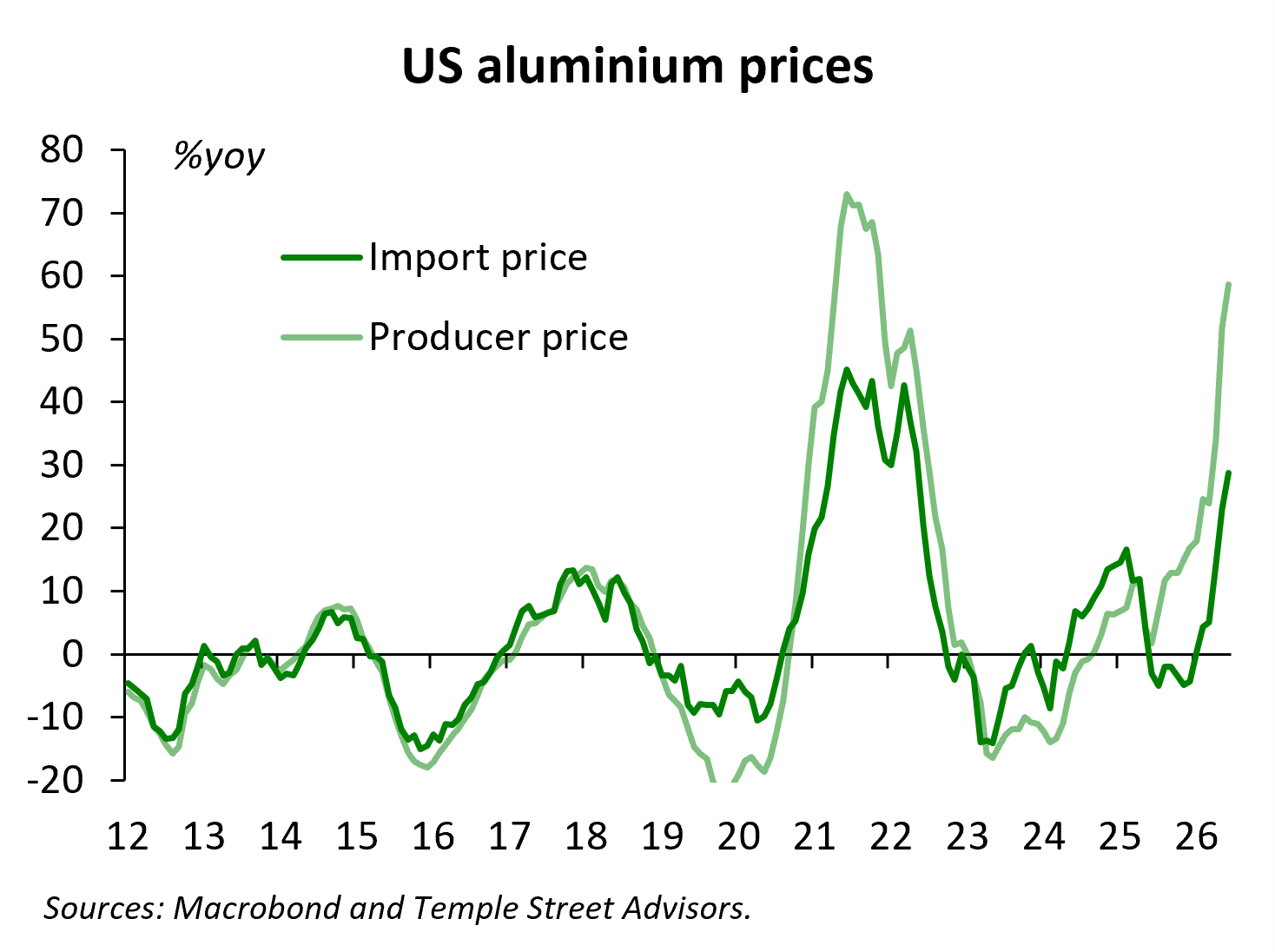
But while imports of aluminium, which collapsed after tariffs were imposed last March, have begun to grow again — up about 6%yoy in April/May this year — domestic production hasn’t exactly surged in response to the additional protection it has been granted. Domestic output is up only 2.5%yoy in Q2.
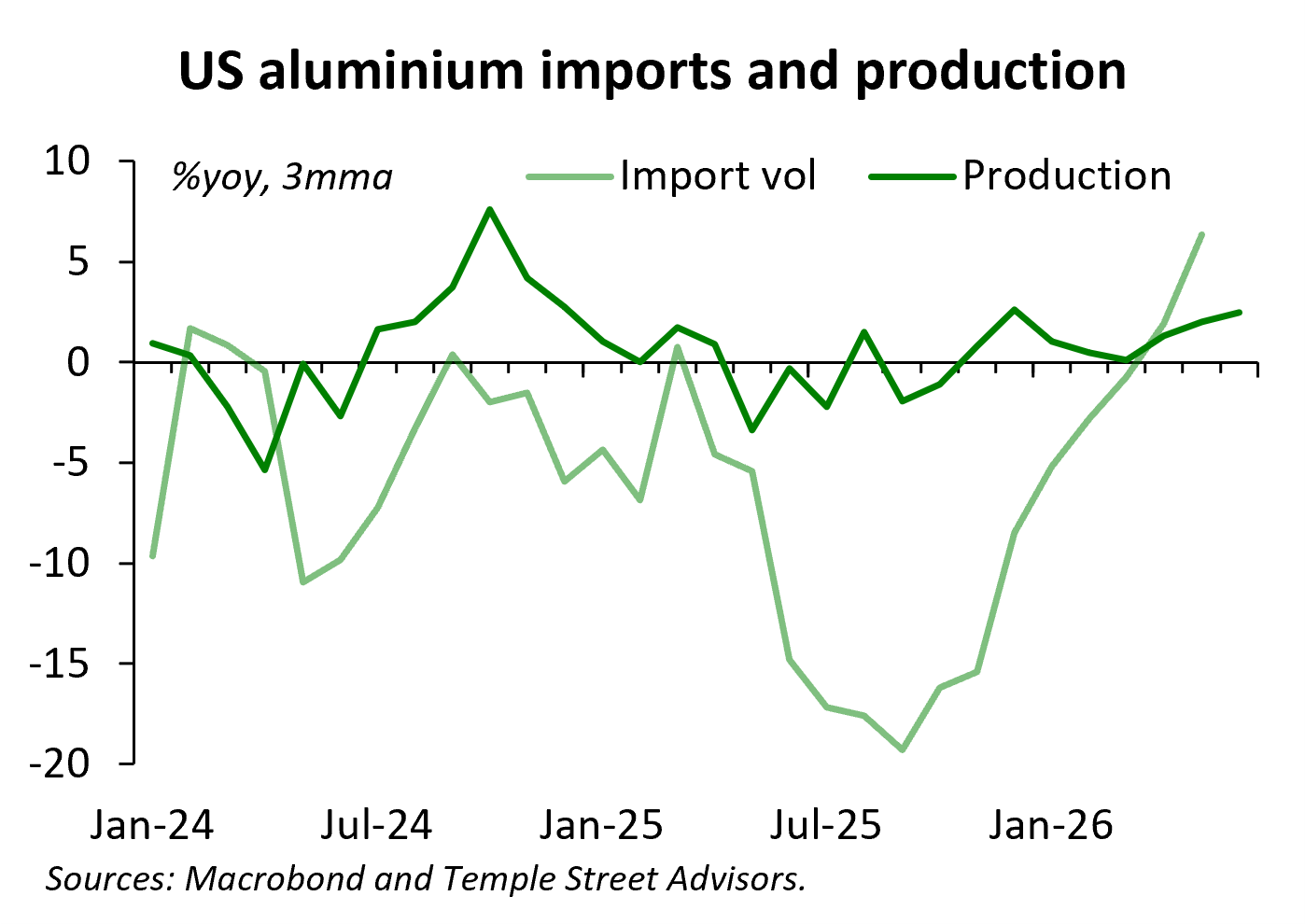
So, on July 20, the same day the tariffs on Canada were announced, Trump announced relief to aluminium consumers. It was presented as support to producers — firms that are committed to investing in production in the US can now import an equivalent amount at a preferential tariff rate — but that would only be needed if the White House is trying to alleviate the burden on users of aluminium. Not for the first time, and I suspect not for the last time, the administration is tacitly acknowledging that its tariffs are hurting consumers.
Bank Indonesia keeps rates unchanged
Bank Indonesia’s Board decided on July 22 to keep its policy rates unchanged after having raised them by 100bps in three steps between May 20 and June 18 — including a surprise inter-meeting hike on June 8. But it hasn’t lost sight of its main objective of stabilizing the IDR. The decision to keep rates unchanged was accompanied by a host of technical measures aimed at incentivising firms to convert foreign currencies to IDR.
…


